

Top AI Voice Software for Creators & Businesses in 2025
The human voice has always been the most powerful interface between ideas and people. Yet recording, editing, localizing, and scaling voice content has traditionally been expensive, slow, and dependent on talent availability. Today, that equation has changed. With the rapid rise of top AI voice software, creators and businesses can generate natural, expressive, and multilingual voices in minutes, not weeks.
From YouTubers producing daily videos to enterprises training thousands of employees, AI voice technology is no longer experimental. It is becoming infrastructure. According to a 2024 report by MarketsandMarkets, the global text-to-speech market is expected to surpass USD 7.6 billion by 2029, driven by content automation, e-learning, and digital marketing demand. The challenge is no longer whether to use AI voice tools, but which one to trust.
This guide exists to solve that problem. Drawing on insights from Vietnam’s leading AI community and hands-on evaluations, we break down how AI voice software works, why it matters, and how to choose the right solution for real-world use.

What Is AI Voice Software & Why It Matters Today
Definition of AI Voice Software
AI voice software refers to applications that use artificial intelligence to convert written text into spoken audio that sounds human. Modern tools go far beyond robotic text-to-speech. They can generate voices with emotion, pacing, accent, and even personality, making them suitable for professional content.
Most platforms today fall into three categories:
- Text-to-Speech (TTS): Converts text into natural-sounding speech.
- AI Voice Generators: Offer libraries of realistic voices optimized for media, ads, and narration.
- Voice Cloning Tools: Replicate a specific human voice using training samples.
How AI Voice Technology Works
Deep Learning & Neural Networks
At the core of top AI voice software are deep neural networks trained on thousands of hours of human speech. These models learn pronunciation, rhythm, tone, and context, allowing them to predict how words should sound in different scenarios. Transformer-based architectures, similar to those used in large language models, are now standard in premium tools.
Voice Cloning & Speech Modeling
Voice cloning uses a smaller dataset, sometimes just a few minutes of recorded audio, to recreate a speaker’s vocal identity. Ethical platforms implement safeguards such as consent verification and watermarking to prevent misuse. When used responsibly, voice cloning enables consistent brand voices, audiobook production, and accessibility solutions.
Multilingual & Accent Training
Leading AI voice platforms support dozens, sometimes hundreds, of languages and regional accents. This is achieved by training models on diverse linguistic datasets, enabling businesses to localize content without hiring separate voice actors for each market. For global brands, this capability directly translates into faster expansion and lower costs.
Key Benefits of AI Voice Software for Creators & Businesses
Benefits for Content Creators
Creators are often constrained by time, budget, and consistency. AI voice software removes these barriers. A single creator can now produce studio-quality voiceovers for videos, podcasts, or social content without recording equipment or post-production delays.
- Faster content production and iteration
- Consistent voice branding across platforms
- Ability to experiment with different tones and styles
For example, many YouTube educators now use AI voice generators to produce multilingual versions of the same video, expanding reach without doubling workload.
Benefits for Businesses
For businesses, the value proposition is even clearer. AI voice software enables scalable communication, from onboarding videos to automated customer support.
- Lower production costs compared to traditional voiceovers
- Rapid localization for international markets
- Always-on availability for IVR and chat systems
A 2023 Deloitte study found that companies using AI-driven content automation reduced production costs by an average of 30–40% while improving speed-to-market.
ROI Comparison: AI Voice vs Traditional Voiceover
Traditional voiceover projects often involve script revisions, studio booking, actor scheduling, and post-editing. In contrast, AI voice tools allow instant edits and re-renders. Over time, especially for high-volume content, the return on investment strongly favors AI solutions.
Criteria for Choosing the Best AI Voice Software
Voice Quality & Naturalness
The most important factor is how human the voice sounds. Listeners quickly disengage when audio feels artificial. Premium tools focus on natural intonation, pauses, and emotional variation.
Voice Cloning Capabilities
Not all businesses need voice cloning, but for brand-driven content, it can be transformative. Always evaluate whether the platform provides ethical safeguards and clear commercial usage rights.
Language & Accent Support
If your audience is global, multilingual support is non-negotiable. The best AI voice software offers not just translation, but culturally appropriate pronunciation and pacing.
Ease of Use & Workflow Integration
A powerful tool is useless if it slows your team down. Look for intuitive interfaces, API access, and compatibility with video editors, LMS platforms, or CMS systems.
Pricing Transparency & Scalability
Finally, pricing should be predictable. Avoid platforms with unclear character limits or hidden commercial licensing fees. Transparent pricing builds trust and supports long-term scaling.
As AI researcher Dr. Rupal Patel notes, “The future of voice AI belongs to systems that combine realism with responsibility. Trust will be as important as technology.”
Top AI Voice Software for Creators & Businesses (Detailed Reviews)
1. VoxBox – Best All-in-One AI Voice Generator
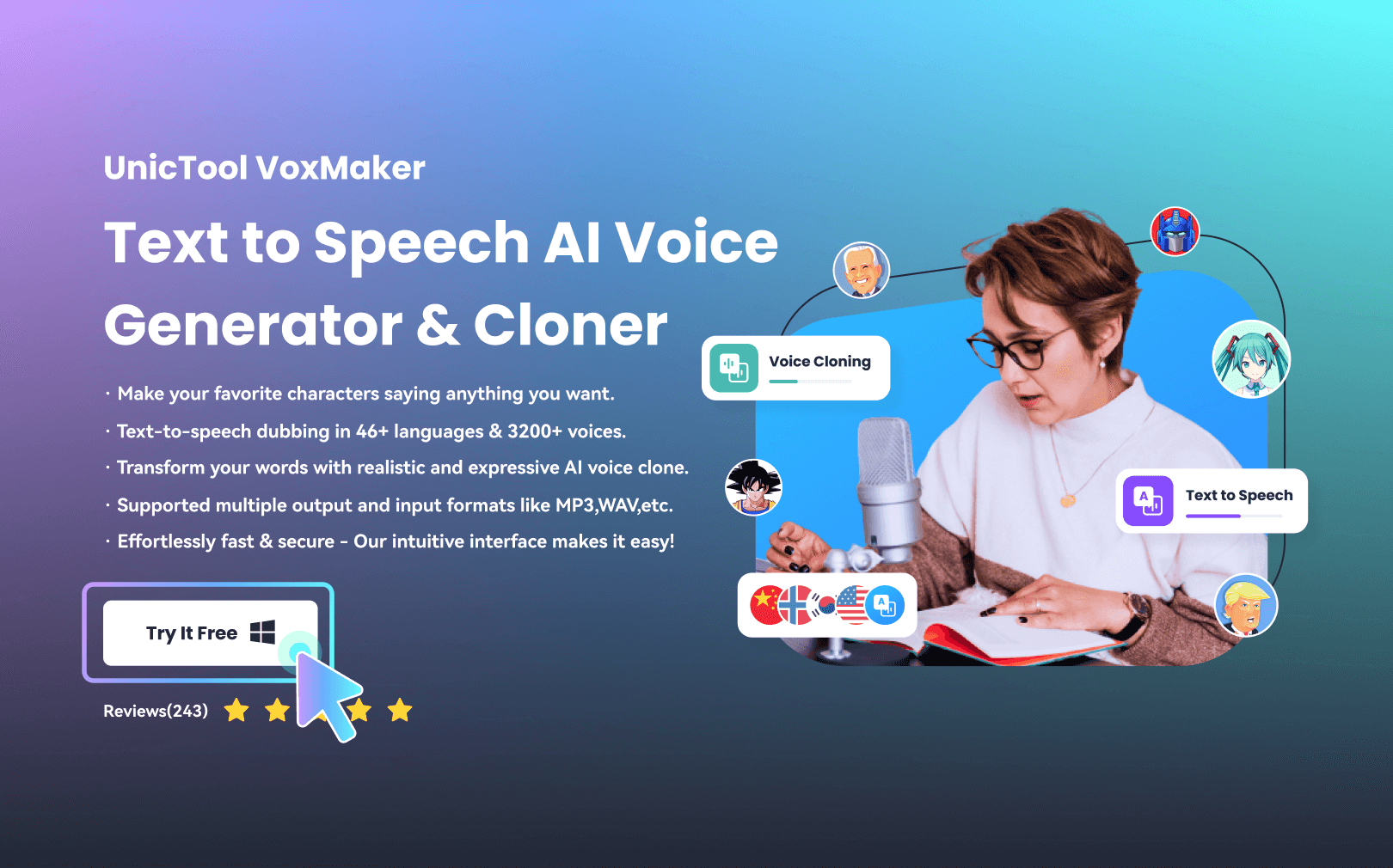
VoxBox has quickly gained popularity among creators and small businesses thanks to its balance of voice quality, feature depth, and accessibility. It supports thousands of AI voices across multiple languages and accents, making it suitable for both local and global content strategies.
Key Features
- 3200+ AI voices with different tones and styles
- Advanced AI voice cloning with short training samples
- Support for over 100 languages and accents
- Offline mode for desktop users
Pros & Cons
- Pros: Large voice library, competitive pricing, beginner-friendly UI
- Cons: Some premium voices locked behind higher tiers
Best Use Cases
VoxBox is ideal for YouTubers, educators, and marketing teams producing frequent voice content without enterprise-level complexity.

2. Murf AI – Best for Professional Voiceovers
Murf AI focuses on studio-grade voiceovers for presentations, ads, and corporate training. Its voices are polished, clear, and optimized for professional contexts.
Strengths
- High-quality commercial voices
- Team collaboration and brand voice management
- Simple licensing for commercial use
Limitations
Murf offers fewer experimental voices and less flexibility for creative manipulation compared to some competitors.
3. ElevenLabs – Best for Ultra-Realistic AI Voices
ElevenLabs is widely recognized for pushing the boundaries of realism. Its neural voices excel in emotional depth, making them popular in audiobooks, storytelling, and game development.
Why It Stands Out
- Highly expressive speech synthesis
- Industry-leading voice cloning accuracy
- API access for developers and studios
Many media studios now use ElevenLabs to prototype narration before hiring human actors, saving both time and budget.
4. Play.ht – Best for Publishers & Bloggers
Play.ht is designed for turning written content into audio. Bloggers and publishers use it to offer audio versions of articles, improving accessibility and on-page engagement.
Key Advantages
- Direct CMS and WordPress integration
- Natural narration for long-form text
- Podcast-ready audio output
5. Descript – Best for Audio & Video Creators
Descript combines AI voice technology with text-based audio and video editing. Its standout feature, Overdub, allows creators to edit audio by editing text.
Ideal For
- Podcasters and video editors
- Teams needing fast revisions
- Creators who value workflow efficiency
AI Voice Software Comparison Table
| Tool | Voice Quality | Voice Cloning | Languages | Best For |
|---|---|---|---|---|
| VoxBox | High | Yes | 100+ | Creators & SMEs |
| Murf AI | Very High | Limited | 20+ | Professional Voiceovers |
| ElevenLabs | Excellent | Advanced | 30+ | Media & Storytelling |
| Play.ht | High | No | 60+ | Publishers |
| Descript | High | Yes | Multiple | Podcasts & Video |
Real-World Use Cases Across Industries
Marketing & Advertising
AI voice software enables rapid A/B testing of ad creatives, localized campaigns, and personalized audio ads at scale.
Education & E-Learning
Educators use AI voices to create consistent lessons, accessible materials, and multilingual courses without re-recording.
Customer Support & IVR
Businesses deploy AI voices in call centers and chatbots to deliver 24/7 support with a human-like experience.
Pricing Models Explained: What Are You Really Paying For?
- Subscription-based: Monthly or annual plans with usage limits
- Pay-per-character: Ideal for occasional users
- Enterprise licensing: Custom pricing for large teams
Transparent pricing is a key trust factor. Platforms that clearly state commercial rights and usage limits are generally safer long-term choices.
Why Trust Reviews on AI.DuyThin.Digital
At AI.DuyThin.Digital, every AI voice tool is evaluated based on hands-on testing, real user feedback, and transparent pricing analysis. Backed by Vietnam’s growing AI community, our mission is to help you save research time and make confident, informed decisions.
Frequently Asked Questions About AI Voice Software
Is AI voice software legal for commercial use?
Yes, provided you follow the platform’s licensing terms and obtain consent for voice cloning when required.
Can AI voices replace human voice actors?
AI voices are excellent for scalability and speed, but human actors remain valuable for highly emotional or artistic projects.
Which AI voice software supports Vietnamese?
Several tools, including VoxBox, now offer Vietnamese voices, though quality varies. Always test before committing.
How secure is voice cloning?
Reputable platforms implement consent verification and usage controls to prevent misuse.
Final Verdict: Choosing the Right AI Voice Software
The best AI voice software depends on your goals. Creators may prioritize flexibility and cost, while businesses focus on scalability and compliance. What matters most is choosing a tool that aligns with your workflow and audience expectations.
Key takeaway: AI voice technology is no longer optional. It is a competitive advantage for anyone producing digital content at scale.
Ready to compare AI voice tools with real data and transparent pricing? Visit
AI.DuyThin.Digital and discover the right AI solution for your business or creative journey today.