
AI Voice for eLearning: Create Engaging Voiceovers That Truly Connect
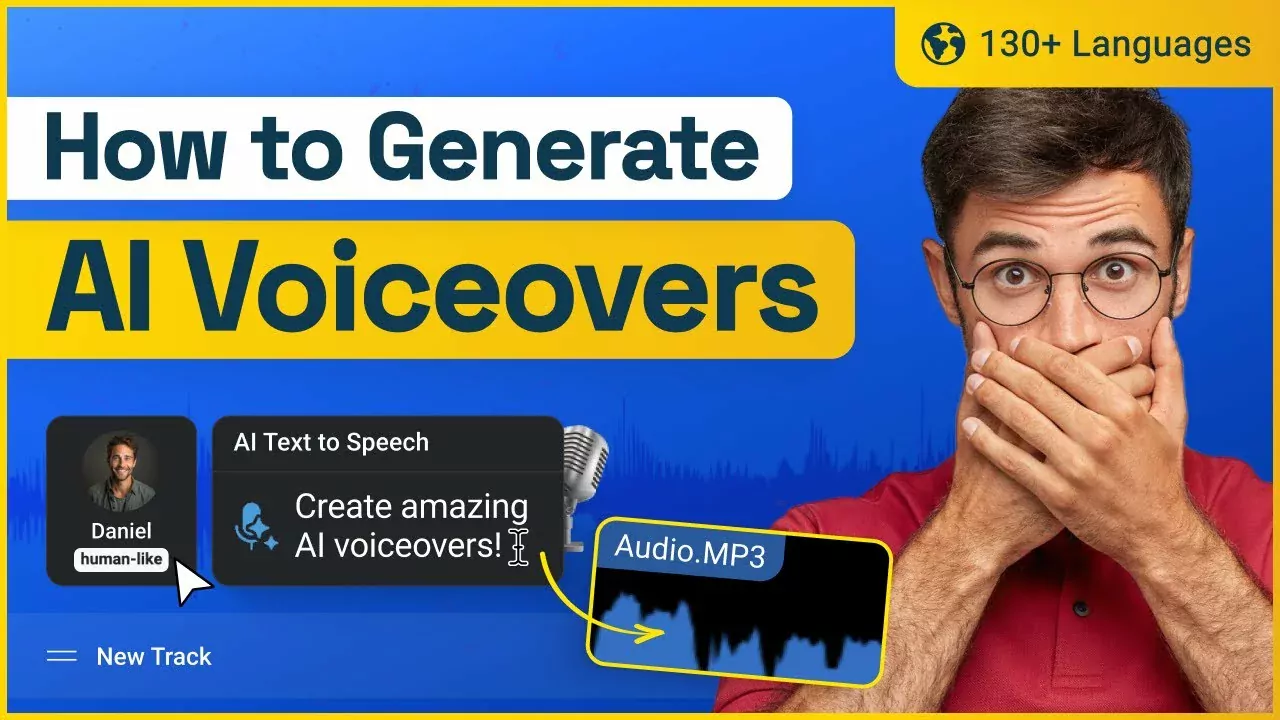
Voice is one of the most underestimated elements in eLearning. You can have beautifully designed slides, interactive quizzes, and cutting-edge platforms, but if the narration feels robotic, unclear, or emotionally flat, learner engagement drops fast. In a world where attention spans are shrinking and online learners expect Netflix-level experiences, traditional voiceovers are becoming a bottleneck. This is where AI voice for eLearning steps in as a game-changer.
Thanks to rapid advances in neural text-to-speech and generative AI, educators and businesses can now create natural, human-like voiceovers at scale, without studios, voice actors, or long production cycles. From solo course creators to enterprise learning teams, AI voice technology is reshaping how educational content is produced, localized, and delivered. This article explores how AI voice works, why it matters for eLearning, and how to use it effectively to boost learner retention and outcomes.
What Is AI Voice for eLearning?
Definition of AI Voice Technology
AI voice technology refers to advanced text-to-speech (TTS) systems powered by machine learning and neural networks that can convert written text into realistic, human-sounding speech. Unlike early robotic TTS tools, modern AI voice engines are trained on thousands of hours of real human speech, enabling them to replicate natural pronunciation, rhythm, intonation, and even emotional nuance.
In the context of eLearning, AI voice is used to narrate lessons, explain concepts, guide learners through modules, and provide audio support for accessibility. Leading platforms such as HeyGen, Aivoov, and other neural voice providers now offer voices that are often indistinguishable from human narrators in standard educational use cases.
How AI Voice Is Used in eLearning
AI voice has become deeply embedded across multiple eLearning formats, including:
- Online courses and MOOCs: Narration for video lessons, slide-based lectures, and walkthroughs.
- Corporate training: Onboarding modules, compliance training, and internal knowledge bases.
- Microlearning content: Short, focused audio explanations for just-in-time learning.
- Language learning apps: Pronunciation models, listening exercises, and dialogue simulations.
- Accessibility support: Audio versions of text-heavy learning materials.
According to a 2023 report by Global Market Insights, the AI-powered text-to-speech market is expected to grow at over 14% CAGR, driven largely by education and enterprise training demand. This signals a clear shift toward AI-generated voice as a mainstream learning tool.
Why AI Voiceovers Are Transforming eLearning
Cost Efficiency Compared to Human Voiceovers
Traditional voiceover production involves hiring professional voice actors, booking recording studios, managing revisions, and paying per finished minute. For eLearning projects with dozens or hundreds of lessons, costs can quickly spiral out of control.
AI voice solutions, by contrast, typically operate on subscription or usage-based pricing. Once you have access to the platform, you can generate unlimited or high-volume voiceovers at a fraction of the cost. For example, updating a single sentence in a compliance course no longer requires re-recording an entire audio track. You simply edit the text and regenerate the voice.
Speed and Scalability
Speed is one of the most compelling advantages of AI voice for eLearning. A complete course narration that once took weeks can now be produced in hours. This is particularly valuable for:
- Rapid course launches
- Frequent content updates
- Agile learning programs
- Seasonal or regulatory training
Large organizations benefit even more. AI voice allows learning teams to scale content production across departments and regions without increasing headcount or outsourcing budgets.
Consistency Across Learning Modules
Human voiceovers can vary in tone, pacing, and pronunciation, especially when recorded over time or by multiple narrators. AI voice ensures perfect consistency across every lesson. The same voice, speed, and style can be applied uniformly, creating a smoother and more professional learning experience.
Instructional designers often highlight consistency as a key factor in cognitive load management. When learners are not distracted by changes in narration style, they can focus more effectively on the content itself.
Multilingual and Global Reach
One of the most powerful features of AI voice technology is multilingual support. Many modern AI voice generators support dozens of languages and regional accents, enabling instant localization of eLearning content.
Instead of producing separate courses for different markets, educators can reuse the same script and generate localized voiceovers for English, Vietnamese, Spanish, Japanese, and more. This dramatically reduces localization costs and makes global education more accessible.
AI Voice vs Human Voiceover for eLearning
Key Differences at a Glance
| Criteria | AI Voice | Human Voiceover |
|---|---|---|
| Cost | Low, predictable subscription | High, per-project or per-minute fees |
| Production Speed | Instant or near-instant | Days to weeks |
| Scalability | Highly scalable | Limited by availability |
| Consistency | Perfectly consistent | May vary over time |
| Emotional Depth | Improving, but limited | Very high |
When AI Voice Is the Better Choice
AI voice is particularly well-suited for:
- Large-scale eLearning libraries
- Technical or informational courses
- Content requiring frequent updates
- Budget-sensitive projects
- Multilingual learning programs
Many successful EdTech platforms now use AI voice for the majority of their instructional content while reserving human narration for marketing or storytelling-heavy materials.
When Human Voice Still Has an Edge
Human voiceovers still excel in emotionally driven content, such as motivational talks, brand storytelling, or highly expressive scenarios. However, the gap is narrowing. As AI voice models continue to evolve, even these areas are beginning to see adoption of AI-generated narration.
As Dr. Rupal Patel, speech scientist and CEO of VocaliD, notes: “The future of voice is not about replacing humans, but about augmenting communication at scale.”
Key Features to Look for in AI Voice for eLearning
Natural-Sounding Voices
The most important criterion when choosing an AI voice for eLearning is how natural it sounds. Learners are quick to disengage when narration feels robotic or monotonous. Modern neural voices leverage deep learning to replicate human speech patterns such as intonation, stress, and rhythm.
High-quality AI voice platforms allow subtle emotional variation, which is essential for maintaining learner attention during longer lessons. Research from the Journal of Educational Psychology suggests that conversational and expressive narration can improve learner recall by up to 23% compared to flat, monotone delivery.
Voice Customization and Control
Effective eLearning narration requires flexibility. The best AI voice tools offer granular control over:
- Speaking speed for different content types
- Pitch and tone adjustments
- Strategic pauses for emphasis
- Pronunciation correction for technical terms
These controls allow instructional designers to tailor narration for complex concepts, ensuring clarity without overwhelming learners.
Multilingual and Accent Support
For global learning programs, multilingual support is no longer optional. Leading AI voice generators now support 30–100+ languages and regional accents. This makes it possible to deliver culturally relevant learning experiences without rebuilding content from scratch.
For example, the same compliance training module can be narrated in American English, British English, Vietnamese, and Japanese within minutes, dramatically accelerating international rollout.
Script Editing and SSML Support
Speech Synthesis Markup Language (SSML) is a powerful feature that allows creators to fine-tune AI-generated speech. With SSML, you can:
- Control emphasis on key phrases
- Add natural pauses
- Spell out acronyms correctly
- Adjust reading style for different sections
This level of control is especially valuable for technical eLearning, where accuracy and clarity are critical.
Audio Export and LMS Integration
A practical AI voice solution must integrate smoothly with existing workflows. Look for platforms that support common audio formats such as MP3 and WAV and work seamlessly with learning management systems (LMS), video editors, and authoring tools like Articulate or Adobe Captivate.
Best AI Voice Tools for eLearning in 2025
Overview of Leading Platforms
Several AI voice platforms stand out in the eLearning space due to their voice quality, features, and commercial licensing clarity:
- HeyGen: Known for realistic voices and video integration.
- Aivoov: Popular for educational narration and affordability.
- Murf AI: Strong customization and studio-like controls.
- Play.ht: Wide language support and API access.
- ElevenLabs: Exceptional realism and voice cloning capabilities.
Feature and Pricing Comparison
| Platform | Voice Quality | Languages | Pricing Model | Best For |
|---|---|---|---|---|
| HeyGen | Very High | 40+ | Subscription | Video-based eLearning |
| Aivoov | High | 30+ | Affordable Plans | Course narration |
| Murf AI | High | 20+ | Tiered Pricing | Professional training |
For transparent comparisons, real user feedback, and up-to-date pricing, platforms like ai.duythin.digital help educators save hours of research by consolidating expert reviews from Vietnam’s leading AI community.
How to Create Engaging AI Voiceovers for eLearning
Write Scripts for the Ear, Not the Eye
One common mistake is using textbook-style writing for narration. Effective AI voice scripts should be conversational, concise, and structured. Short sentences, active voice, and direct address (“you will learn”) make content easier to follow.
Optimize Voice Settings for Learning
The ideal narration speed for learning content is typically between 140–160 words per minute. Slower pacing works well for complex topics, while slightly faster delivery suits reviews or summaries. Strategic pauses help learners process information.
Synchronize Voice with Visuals
AI voice is most effective when tightly aligned with on-screen visuals. Synchronizing narration with diagrams, animations, or screen recordings reinforces understanding and supports dual-channel learning, a principle backed by cognitive science research.
Quality Control and Feedback
Before publishing, always review AI-generated audio for pronunciation accuracy and flow. Gathering learner feedback after launch provides valuable insights for continuous improvement.
AI Voice Use Cases in Real-World eLearning
- Online course platforms: Scalable narration for thousands of lessons.
- Corporate learning: Fast updates to policy and compliance training.
- Language education: Consistent pronunciation models.
- Educational YouTube channels: Professional audio without studio costs.
According to LinkedIn Learning’s 2024 Workplace Learning Report, organizations that update training content more frequently see higher employee engagement and knowledge retention. AI voice enables exactly this level of agility.
SEO, Accessibility, and Compliance Benefits
AI voice improves accessibility by providing audio alternatives for text-based content, supporting visually impaired learners and meeting accessibility standards such as WCAG. Additionally, pairing AI narration with transcripts enhances SEO by making content more indexable and discoverable.
Challenges and Ethical Considerations
While AI voice offers many benefits, it is important to disclose its use transparently and avoid over-automation. Ethical eLearning design prioritizes clarity, learner trust, and appropriate use of technology rather than novelty alone.
Frequently Asked Questions (FAQs)
Is AI voice suitable for professional eLearning?
Yes. Many universities, enterprises, and EdTech companies already use AI voice for large-scale training and education programs.
Can AI voice replace human narration completely?
Not entirely. AI voice excels in scalability and efficiency, while human narration remains valuable for emotionally rich storytelling.
Are AI voiceovers allowed for commercial courses?
Most platforms offer commercial licenses, but always review usage rights carefully.
Final Thoughts and Call to Action
AI voice for eLearning is no longer an emerging trend. It is a practical, proven solution that empowers educators and businesses to create engaging, accessible, and scalable learning experiences. When used thoughtfully, AI voice enhances—not replaces—human-centered education.
If you want to choose the right AI voice solution with confidence, explore in-depth reviews, feature comparisons, and transparent pricing at ai.duythin.digital. Save time on research and make informed decisions backed by real-world expertise.