

Generate AI Voice from Text: Step-by-Step Guide for Business & Personal Use
In a world where content moves faster than human voices can record, the ability to generate AI voice from text has quietly become a competitive advantage. From startups launching explainer videos overnight to educators publishing multilingual courses without hiring voice actors, AI-powered text-to-speech is no longer futuristic. It is practical, scalable, and already reshaping how we communicate.
Yet many people still struggle with the same questions: How does AI voice generation actually work? Which tools are reliable? And how can you use AI voices without sacrificing quality or trust? This guide answers those questions step by step, drawing on real-world use cases, credible data, and hands-on expertise to help you make informed decisions.
What Is AI Voice Generation from Text?
Understanding Text-to-Speech (TTS) AI
AI voice generation from text, commonly known as text-to-speech (TTS), is a technology that converts written text into spoken audio using artificial intelligence. Unlike early robotic TTS systems, modern AI voice generators rely on deep learning models trained on thousands of hours of human speech, enabling them to produce voices that sound remarkably natural.
According to a 2024 report by Statista, the global text-to-speech market is expected to surpass $7.6 billion by 2029, driven largely by content automation, accessibility needs, and AI-driven customer engagement. This rapid growth reflects not just novelty, but real economic value.
How AI Voice Technology Works
At a technical level, AI voice generation combines several advanced disciplines:
- Natural Language Processing (NLP): Interprets text meaning, grammar, and context.
- Speech Synthesis Models: Convert linguistic units into sound waves.
- Neural Networks: Learn tone, rhythm, and emotional nuance from real voices.
Modern systems often use neural TTS architectures such as Tacotron or transformer-based models. These allow AI voices to vary pitch, pacing, and emphasis, making them suitable for storytelling, marketing, and professional narration rather than simple announcements.
From Text Input to Natural-Sounding Voice Output
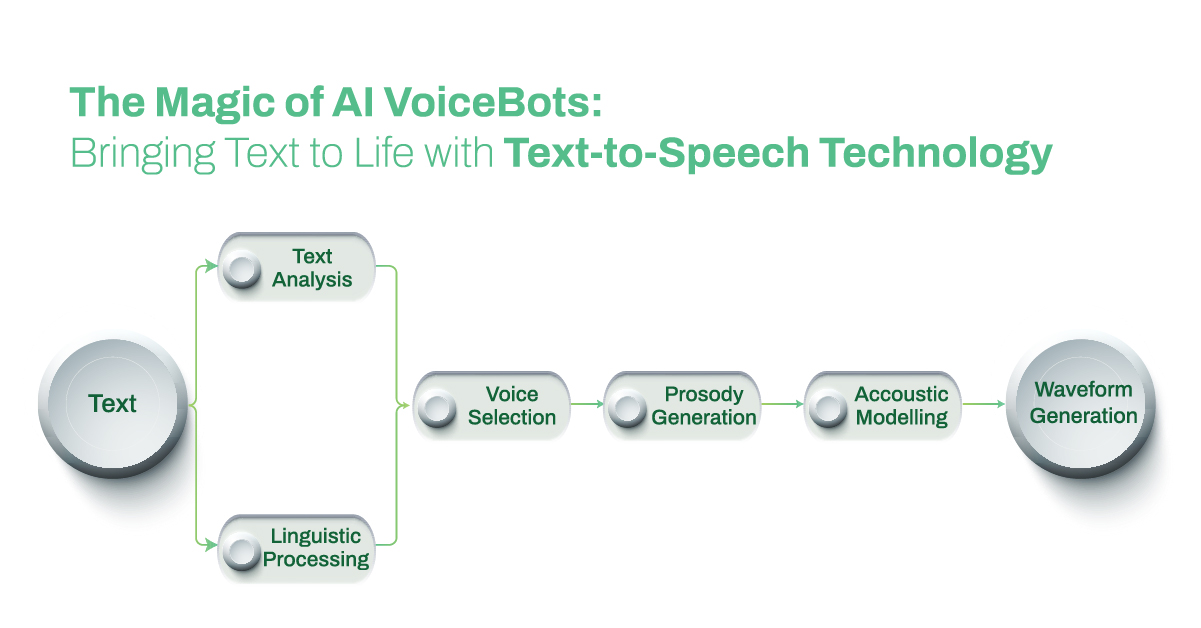
The process of generating AI voice from text typically follows these stages:
- Text Analysis: The AI breaks text into sentences, words, and phonemes.
- Prosody Modeling: It predicts intonation, stress, and pauses.
- Waveform Generation: The system produces the final audio output.
This pipeline explains why punctuation, sentence length, and wording matter. Small textual changes can significantly improve how natural the AI voice sounds.
Why Generate AI Voice from Text? Key Benefits
Time and Cost Efficiency
Traditional voice production involves scripting, recording sessions, retakes, audio editing, and often professional voice actors. AI voice generation removes most of these steps. A marketing team can turn a blog post into a voiceover in minutes, not days.
For example, a mid-sized e-learning company in Southeast Asia reported reducing narration costs by over 60% after switching to AI-generated voice for course updates, while still maintaining professional audio quality.
Scalability for Business Growth
One of the biggest advantages of AI voice technology is scalability. Businesses can generate thousands of audio files consistently, without worrying about voice fatigue or scheduling conflicts.
- Product tutorials for every feature update
- Localized ads for multiple regions
- Automated voice responses for customer support
This is particularly valuable for startups and SMEs that need to move fast with limited resources.
Accessibility and Inclusivity
AI voice generation plays a critical role in accessibility. It enables content creators to serve users with visual impairments, reading difficulties, or language barriers. Governments and educational institutions increasingly rely on TTS to meet accessibility standards.
As the World Wide Web Consortium (W3C) emphasizes, accessible content is not optional. AI-generated voice helps organizations comply while expanding their audience.
Use Cases Across Industries
AI voice technology is no longer limited to tech companies. Today, it is actively used in:
- Marketing: Video ads, social media narration, explainer videos
- Education: Audiobooks, online courses, training materials
- Customer Service: IVR systems, virtual assistants
- Content Creation: Podcasts, YouTube videos, TikTok voiceovers
Common Use Cases of AI Voice Generation
Marketing and Advertising
Marketing teams increasingly generate AI voice from text to speed up content production. Instead of hiring different voice actors for A/B testing ads, marketers can instantly test multiple voice styles and tones.
An AI voice can be upbeat for social media ads, calm for product demos, or authoritative for brand storytelling, all generated from the same script.
E-Learning and Corporate Training
In education, AI voice generation allows instructors to update lessons quickly. When a regulation changes or a slide is revised, the audio can be regenerated instantly without re-recording entire modules.
This flexibility is especially valuable for compliance training, where accuracy and speed matter.
Customer Service and IVR Systems
AI-generated voices are widely used in automated phone systems and chatbots. Unlike static recordings, AI voices can dynamically read updated information such as delivery times or account balances.
“AI voice technology has transformed IVR systems from rigid menus into adaptive, conversational experiences,” notes a 2023 report from Gartner on conversational AI.
Content Creation and Personal Projects
Independent creators use AI voices to narrate videos, podcasts, and short-form content without expensive equipment. For solo creators, this lowers the barrier to entry and enables consistent publishing.
Whether you are building a faceless YouTube channel or experimenting with audiobooks, AI voice generation offers speed without compromising creative control.
Step-by-Step Guide to Generate AI Voice from Text
Step 1: Choose the Right AI Voice Tool
The foundation of high-quality AI voice output lies in choosing the right tool. Not all AI voice generators are created equal, and the best option depends on your goals, budget, and intended use.
When evaluating platforms to generate AI voice from text, consider the following criteria:
- Voice naturalness: Does the voice sound human or robotic?
- Language and accent support: Essential for global or regional audiences.
- Customization options: Control over tone, speed, pitch, and emotion.
- Commercial licensing: Clear rights for business usage.
Expert tip: Always test a short sample before committing to a subscription. Real-world listening reveals more than marketing claims.
Step 2: Prepare and Optimize Your Text
Even the most advanced AI voice generator depends heavily on the quality of input text. Writing for audio is different from writing for reading.
Best practices when preparing text include:
- Use shorter sentences for natural pacing
- Add commas and line breaks to guide pauses
- Avoid overly complex phrasing
- Spell out abbreviations on first use
For example, changing “AI boosts ROI significantly” to “Artificial intelligence boosts return on investment significantly” often improves pronunciation accuracy.
Step 3: Select Voice, Language, and Style
Most modern platforms offer a library of AI voices across genders, accents, and speaking styles. This step is where branding and audience alignment matter most.
Ask yourself:
- Is the voice formal or conversational?
- Does it match my brand personality?
- Is it culturally appropriate for my audience?
Many tools also allow emotional tuning, such as calm, energetic, or empathetic tones, which is particularly useful for marketing and storytelling.
Step 4: Generate the AI Voice
Once settings are configured, generating the AI voice from text is usually a one-click process. Processing time ranges from seconds to minutes depending on text length and platform infrastructure.
Some advanced tools offer:
- Real-time preview
- Batch generation for large projects
- API access for automation
For businesses, API-based generation enables seamless integration into apps, websites, and customer service workflows.
Step 5: Edit, Export, and Use the Audio
After generation, review the audio carefully. Most platforms allow you to export files in formats such as MP3 or WAV.
Optional post-processing steps include:
- Trimming silences
- Adjusting volume levels
- Adding background music
Even minimal editing can elevate AI-generated audio to broadcast-ready quality.
Best AI Voice Generators in 2025: What to Compare
Key Comparison Criteria
Choosing an AI voice tool is easier when you compare platforms across standardized dimensions:
| Criteria | Why It Matters |
|---|---|
| Voice Quality | Determines listener trust and engagement |
| Language Support | Critical for international and local markets |
| Ease of Use | Reduces learning curve and production time |
| Pricing Transparency | Avoids hidden usage costs |
How Trusted Review Platforms Add Value
Instead of testing dozens of tools individually, many users rely on expert review platforms that provide side-by-side comparisons, real user feedback, and updated pricing.
Platforms like ai.duythin.digital help users save research time by offering curated insights from Vietnam’s leading AI community, covering both business and personal use cases.
AI Voice Pricing Models Explained
Free vs Paid AI Voice Tools
Free plans are useful for experimentation but often come with limitations such as watermarked audio, restricted voices, or non-commercial licenses.
Paid tools typically unlock:
- Higher-quality neural voices
- Commercial usage rights
- Priority processing
Subscription vs Pay-As-You-Go
Subscription models suit regular creators and businesses, while pay-as-you-go pricing works well for occasional users. Understanding your usage pattern prevents overspending.
Ethical, Legal, and Copyright Considerations
Voice Cloning and Consent
Some advanced platforms allow voice cloning. While powerful, this feature raises ethical and legal concerns. Always obtain explicit consent before cloning any individual’s voice.
Unauthorized voice replication can violate privacy and intellectual property laws in many jurisdictions.
Commercial Usage Rights
Before using AI-generated voice in ads, products, or monetized content, verify licensing terms. Reputable providers clearly state whether commercial usage is included.
Future Trends in AI Voice Generation
Emotion-Aware and Hyper-Realistic Voices
Next-generation AI voice models are learning to adapt emotion dynamically, responding to context rather than static settings. This will further blur the line between human and AI narration.
Real-Time and Multilingual Voice AI
Real-time translation and voice generation will enable global communication at unprecedented speed, transforming customer service, education, and entertainment.
Frequently Asked Questions (FAQ)
Can AI-generated voices sound completely human?
While AI voices are increasingly natural, trained listeners may still notice subtle differences. However, for most practical applications, the quality is more than sufficient.
Is it legal to use AI voice for commercial projects?
Yes, provided the platform grants commercial rights and no copyrighted or cloned voices are used without consent.
How much does it cost to generate AI voice from text?
Costs range from free tiers to enterprise plans costing hundreds of dollars per month, depending on voice quality, usage volume, and features.
Conclusion: Is Generating AI Voice from Text Worth It?
Generating AI voice from text is no longer a novelty. It is a practical tool that saves time, reduces costs, and unlocks new creative possibilities. Whether you are a business scaling content or an individual creator experimenting with audio, AI voice technology offers measurable value.
The key lies in choosing the right tool, understanding ethical boundaries, and aligning voice output with your audience’s expectations.
If you want expert-reviewed AI solutions, transparent pricing, and real community insights, explore trusted resources like ai.duythin.digital to make confident, informed decisions.